


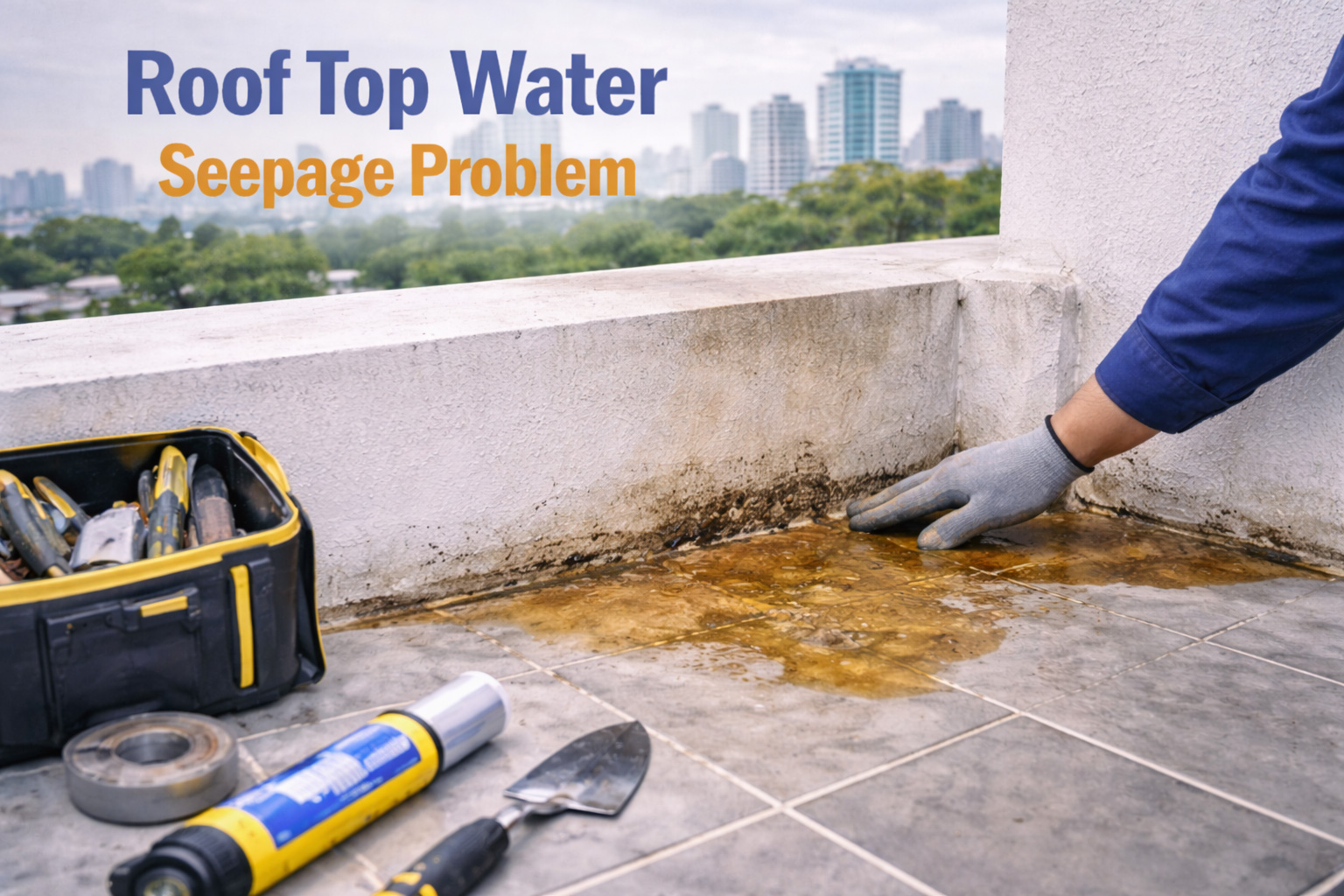
Roof Top Water Seepage Problem: How to Identify, Fix, and Prevent It in Your Singapore Business
Water seepage is a common issue that many business owners in Singapore face, and roof top water seepage problems are particularly problematic. Roof leaks can lead to extensive damage, not only to the building itself but also to the internal structure, leading to costly repairs, mold growth, and potential disruptions to daily operations. Singapore’s tropical climate—with its heavy rainfall, high humidity, and frequent thunderstorms—makes it even more crucial to address roof seepage problems quickly and effectively.
In this detailed guide, we’ll explore the causes and signs of roof top water seepage problems, how to fix them, and most importantly, how to prevent them from recurring. Whether you manage a commercial building, retail space, or office in Singapore, understanding how to address these issues will help protect your property and reduce long-term maintenance costs.
What Is a Roof Top Water Seepage Problem?
Roof top water seepage refers to the unwanted flow of water through cracks, holes, or joints in the roof structure, leading to leaks and water damage inside the building. In Singapore’s humid and wet climate, roof leaks are particularly common in older buildings, where the roof and its waterproofing may have deteriorated over time. Water seepage can cause various issues, including ceiling stains, mold growth, and damage to electrical systems, resulting in costly repairs.
To avoid the escalating costs and disruption that roof top water seepage problems can cause, it’s crucial to address the issue as soon as you notice signs of water infiltration. Left untreated, this issue can lead to significant structural damage and safety hazards.
Causes of Roof Top Water Seepage Problems in Singapore
Understanding the root causes of roof top water seepage problems is key to finding the right solutions. Below are the most common reasons why roof leaks occur in Singapore businesses:
1. Damaged or Worn-Out Waterproofing
Over time, the waterproofing membranes or coatings used on flat roofs or sloped roofs can deteriorate due to exposure to UV rays, moisture, and temperature fluctuations. Once the waterproofing layer is damaged, water can seep into the roof structure and create leaks.
Signs: Discoloration of the ceiling, damp spots on the walls, and peeling paint near the ceiling area.
2. Clogged Roof Drains
Roof drains help direct water away from the roof, but over time, debris, leaves, dirt, or even birds’ nests can clog the drainage system, leading to water pooling on the roof. The excess water can then seep through cracks or joints, causing leaks inside the building.
Signs: Water pooling on the roof after rainfall, slow drainage, or visible debris in the drainage areas.
3. Improper Roof Installation or Poor Construction
In some cases, roof top water seepage problems may occur due to poor roof installation or faulty construction. If the roofing system wasn’t properly designed or installed, or if there are gaps in joints or flashing, water can infiltrate through those weak points.
Signs: Leaks around seams or joints, visible gaps or improperly sealed edges, or uneven roof surfaces.
4. Roof Aging and Wear and Tear
As roofs age, their materials naturally begin to wear out. This is especially true for older buildings, where the roofing materials may no longer be up to modern standards. Age-related issues, such as cracked tiles or corroded metal, can allow water to seep through.
Signs: Visible cracks, rust spots, or sagging sections on the roof.
5. Faulty Flashing
Flashing is the material used to seal the joints between different sections of the roof, such as where the roof meets the walls, chimneys, or vents. If the flashing becomes loose, damaged, or improperly installed, water can easily penetrate the roof.
Signs: Leaks around chimneys, vents, skylights, or other roof penetrations.
How to Identify Roof Top Water Seepage Problems
Early detection of roof top water seepage problems is critical to prevent costly repairs. Here are some common signs that your roof may have a water seepage problem:
1. Water Stains on Ceilings and Walls
One of the most obvious signs of roof seepage is water stains on the ceiling or walls, especially directly beneath the roof. These stains may start small but can spread quickly if not addressed.
2. Musty Odor
A musty or damp smell in your business space could indicate water seepage, particularly if it’s accompanied by visible water stains. This odor often comes from mold or mildew, which thrives in damp environments.
3. Peeling Paint or Wallpaper
Water can cause paint or wallpaper to peel or bubble, especially on ceilings and walls directly beneath the affected roof area. This is a clear indication that water has seeped through the roof and is affecting the interior.
4. Mold and Mildew Growth
Mold and mildew are common signs of prolonged moisture in a building. If you notice mold growth near the ceiling or corners of your walls, it’s essential to check your roof for water seepage.
5. Visible Cracks or Holes in the Roof
If you can safely inspect your roof, look for any visible cracks, holes, or damaged areas. These could be the source of water infiltration. Cracks in tiles or worn-out roofing materials are often the primary causes of seepage.
How to Fix Roof Top Water Seepage Problems
Once you’ve identified that your building has roof top water seepage problems, it’s crucial to address the issue immediately to avoid further damage. Here are some common solutions:
1. Repair or Replace the Waterproofing Membrane
If your roof’s waterproofing is damaged or worn out, it’s essential to repair or replace it. Professional contractors can apply a new waterproofing layer to prevent water from infiltrating the roof and to protect your property from future leaks.
Tip: Make sure the contractor uses high-quality materials designed for Singapore’s climate, ensuring long-lasting protection.
2. Clear Blocked Roof Drains
Roof drains can often become clogged with debris, which causes water to pool and eventually seep through the roof. Hire a contractor to clean and clear out any blockages in your roof drainage system to ensure proper water flow.
Tip: Regularly clean gutters and drains to prevent future blockages, especially during the rainy season.
3. Replace Damaged Roof Materials
If your roof has cracked tiles, rusted metal, or damaged materials, they should be replaced. Professional contractors can inspect your roof and replace any damaged areas to restore its functionality.
Tip: Regular roof inspections every few years can help catch small issues before they turn into larger problems.
4. Seal Gaps and Joints
If the cause of the seepage is faulty flashing or gaps in the roof joints, the solution is to reseal the affected areas. Properly sealing the seams and joints of the roof ensures that water cannot penetrate and cause leaks.
Tip: Use high-quality sealants designed for roofing applications to ensure a watertight seal.
5. Install a New Roof
In cases of severe damage or aging roofs, replacing the entire roof may be necessary. While this is a more costly solution, it may be the most cost-effective in the long run if the roof is beyond repair.
Tip: Consider upgrading to more durable roofing materials, such as metal or modern polymer-based options, which provide better water resistance and longevity.
Cost of Fixing Roof Top Water Seepage Problems in Singapore
The cost of repairing roof top water seepage problems depends on the extent of the damage, the materials used, and the size of the roof. Below is a general breakdown of costs for different types of repairs:
1. Minor Repairs
Cost Range: SGD 200 – SGD 1,000
Includes small fixes such as resealing joints, fixing small cracks, and clearing blocked drains.
2. Moderate Repairs
Cost Range: SGD 1,000 – SGD 5,000
Involves replacing damaged waterproofing membranes, patching larger cracks, or repairing sections of the roof.
3. Major Repairs
Cost Range: SGD 5,000 – SGD 20,000+
For extensive repairs, such as replacing the entire roof, repairing structural damage, or redoing the waterproofing system.
For an accurate quote, it’s recommended to contact a professional roofing contractor in Singapore to conduct an inspection and provide a tailored solution.
FAQ About Roof Top Water Seepage Problems
1. How do I know if my roof has a water seepage problem?
Common signs include water stains on ceilings and walls, mold or mildew growth, peeling paint, and a musty smell. If you notice any of these signs, it’s essential to inspect the roof for leaks.
2. Can I fix the water seepage problem myself?
While minor fixes like cleaning blocked drains or sealing small cracks can be done DIY, it’s always better to hire a professional for comprehensive repairs. Professional contractors ensure the problem is fixed correctly and safely.
3. How long does it take to fix a roof top water seepage problem?
The time needed depends on the severity of the problem. Minor repairs may take a day, while extensive work, such as replacing the roof or waterproofing, may take several days to weeks.
4. How long will a new roof last?
A new roof, if properly installed and maintained, can last anywhere from 15 to 50 years, depending on the materials used and the climate conditions.
5. What causes roof top water seepage in Singapore?
Singapore’s humid climate and frequent rainfall can deteriorate roofing materials over time. Other causes include poor waterproofing, clogged drains, cracks in the roof, and damaged flashing.
Conclusion: Protect Your Property from Roof Top Water Seepage Problems
Roof top water seepage problems can cause extensive damage to your business property in Singapore if left unaddressed. Regular inspections, timely repairs, and proper maintenance are key to preventing costly water damage and ensuring the long-term protection of your building. Whether it’s fixing minor leaks or replacing an entire roof, working with a professional contractor is the best way to protect your property from the damaging effects of water seepage.
If you’re experiencing roof top water seepage problems, contact a trusted contractor today for an inspection. Addressing the issue early will save you money and help maintain the structural integrity of your business for years to come.